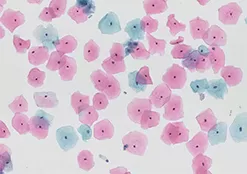
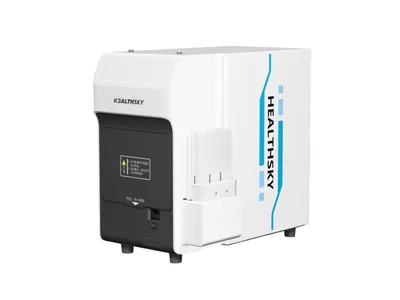
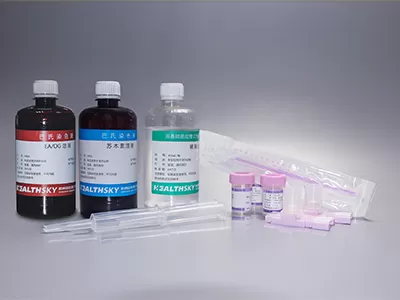
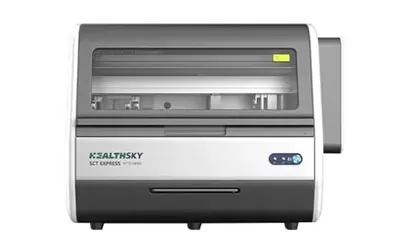
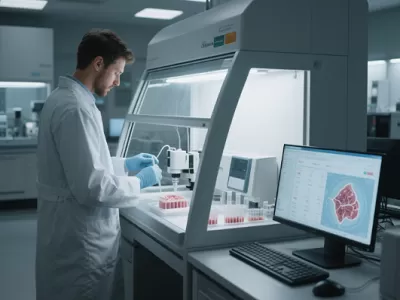
Tissue processing equipment is indispensable in modern histological laboratories. Their primary function is to efficiently complete the entire tissue preparation workflow—from dehydration to embedding—through automated procedures, thereby ensuring reliable conditions for subsequent sectioning and staining. The core objective is to remove water from the tissue and replace it with a supporting medium of sufficient hardness to prevent damage or deformation during microtomy.
A typical tissue processing protocol consists of four main steps: dehydration, clearing, infiltration, and embedding. During dehydration, the tissue processing equipment gradually replaces water within the specimen with dehydrating agents (e.g., ethanol) of increasing concentrations. This gradual exchange minimizes structural damage caused by abrupt fluid replacement. Proper control of the dehydration process is critical to preserving tissue integrity: excessive dehydration may lead to shrinkage and hardening, whereas incomplete dehydration compromises subsequent infiltration.
In the clearing stage, the processor replaces the dehydrating agent with a clearing agent (e.g., xylene), rendering the tissue semi-transparent and preparing it for paraffin infiltration. An ideal clearing agent should exhibit low toxicity, low cost, and low flammability, while being miscible with both the dehydrating agent and the embedding medium.
During infiltration, tissues are fully immersed in heated paraffin wax. As the most widely used embedding medium, paraffin effectively surrounds and supports tissue structures, forming compact blocks upon cooling. The infiltration temperature is typically maintained 2–4 °C above the melting point of paraffin (58–60 °C) to ensure complete penetration of the wax into tissue.
Embedding is the final step in the workflow. Modern tissue processing equipment is often equipped with automated embedding systems, consisting of a paraffin dispenser, a cooling plate, and embedding moulds. During embedding, correctly oriented specimens are placed into moulds, enveloped in paraffin, and rapidly cooled into solid blocks. Proper orientation is essential for obtaining high-quality sections, particularly for specific structures such as tubular organs or epithelial tissues, which must be positioned according to standard protocols.
The use of tissue processing equipment has greatly improved both laboratory efficiency and the quality of histological sections. Their automation and standardization reduce human error while preserving tissue integrity and diagnostic value. Consequently, tissue processing equipment plays an irreplaceable role in modern histopathology.
 EN
EN
 jp
jp  ko
ko  fr
fr  de
de  pt
pt  ar
ar  es
es  ru
ru  fa
fa  id
id